How to Get Your Product Cited by ChatGPT, Perplexity and Claude
Get cited by AI assistants by publishing clear how-to pages and subtitle transcripts that give ChatGPT, Perplexity and Claude the exact steps in your words.
 Baltej Singh · Founder, DemoVexa 3 min read
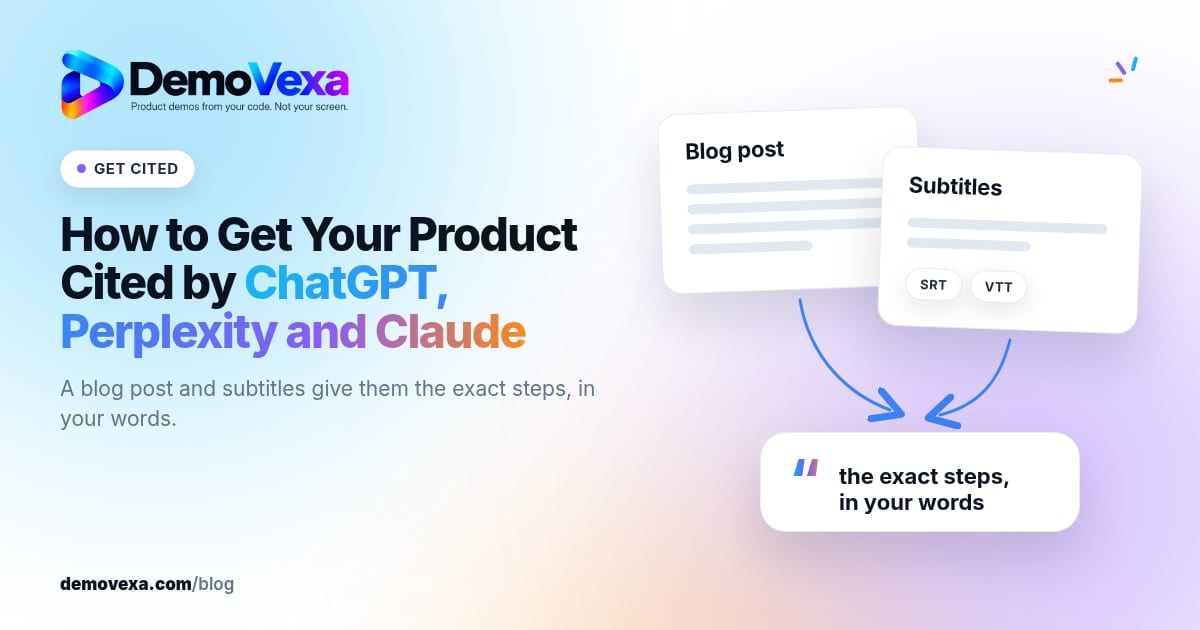
To get cited by AI assistants such as ChatGPT, Perplexity and Claude, publish pages that answer a product question with exact steps, stable names and a transcript they can quote. Assistants pull from text they can trust. A vague homepage paragraph loses to a how-to that names the button and the outcome.
Why AI answers skip most product marketing sites
Answer engines look for passages that resolve a question. DemoVexa's why DemoVexa page puts it this way: ChatGPT, Perplexity, Gemini and Claude answer from pages that explain clearly, and a blog post plus subtitles give them the exact steps in your words. That is answer-engine optimization in practice: clarity, not cleverness.
If your feature page only says the workflow is "powerful" and "intuitive", there is nothing concrete to cite. If your how-to says "Open Sharing, click Copy link, set expiry to 7 days", that sentence can travel into an answer with your product name attached.
What a citable product page looks like
- A direct answer in two or three sentences at the top.
- Numbered steps that match the current UI.
- The same terms the product uses (no internal codenames).
- An embedded how-to video with captions.
- An FAQ that mirrors real wording from tickets and sales calls.
- A visible update path when screens change.
Subtitles are part of the citation surface
Spoken product names in a video help viewers. An SRT or VTT that spells those names correctly helps machines. Export subtitles with the render, then publish them with the video and keep the blog post aligned with the same wording (render docs). Edit names once in the Script step so voice, captions and page stay in sync (script docs).
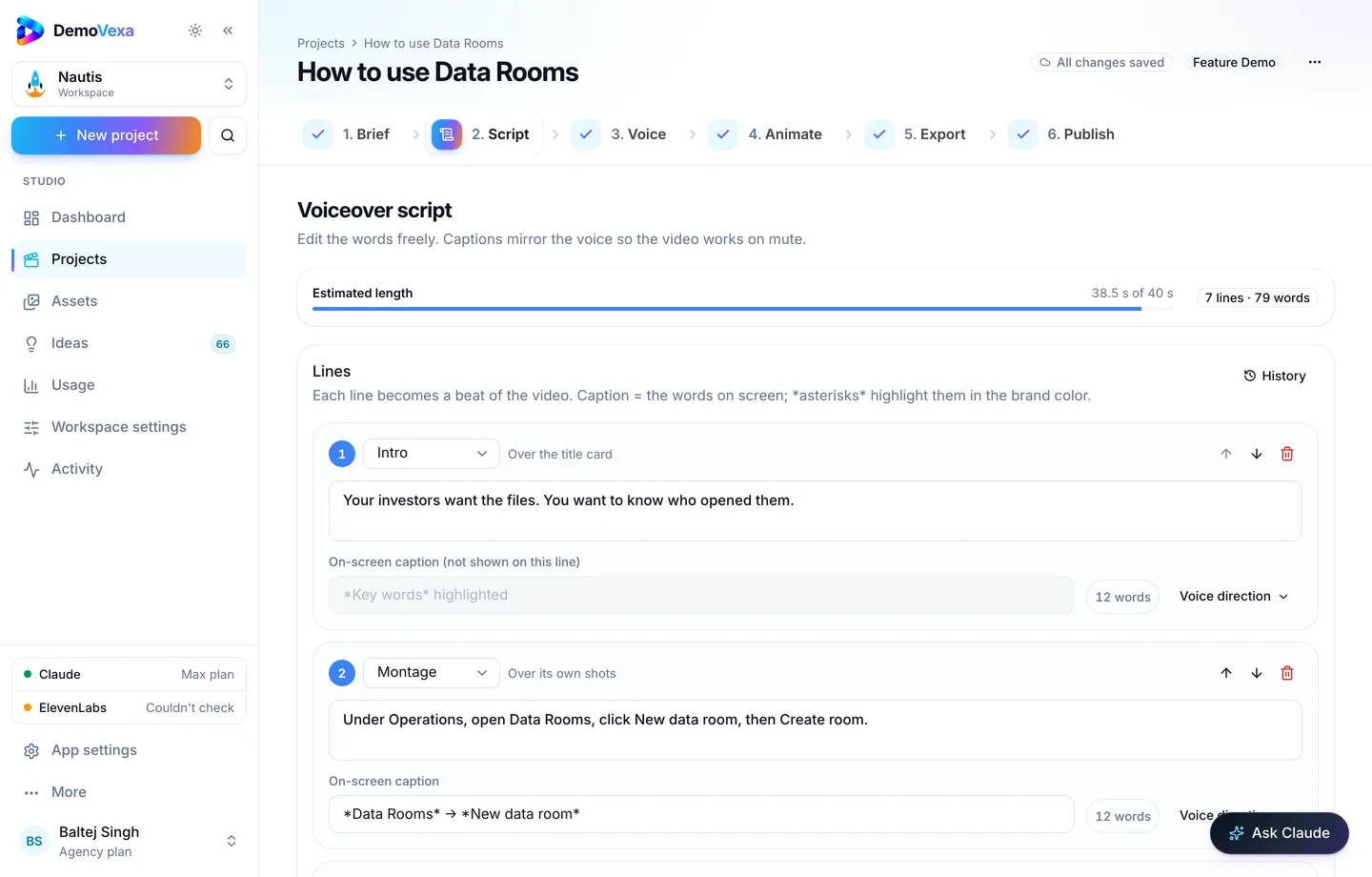
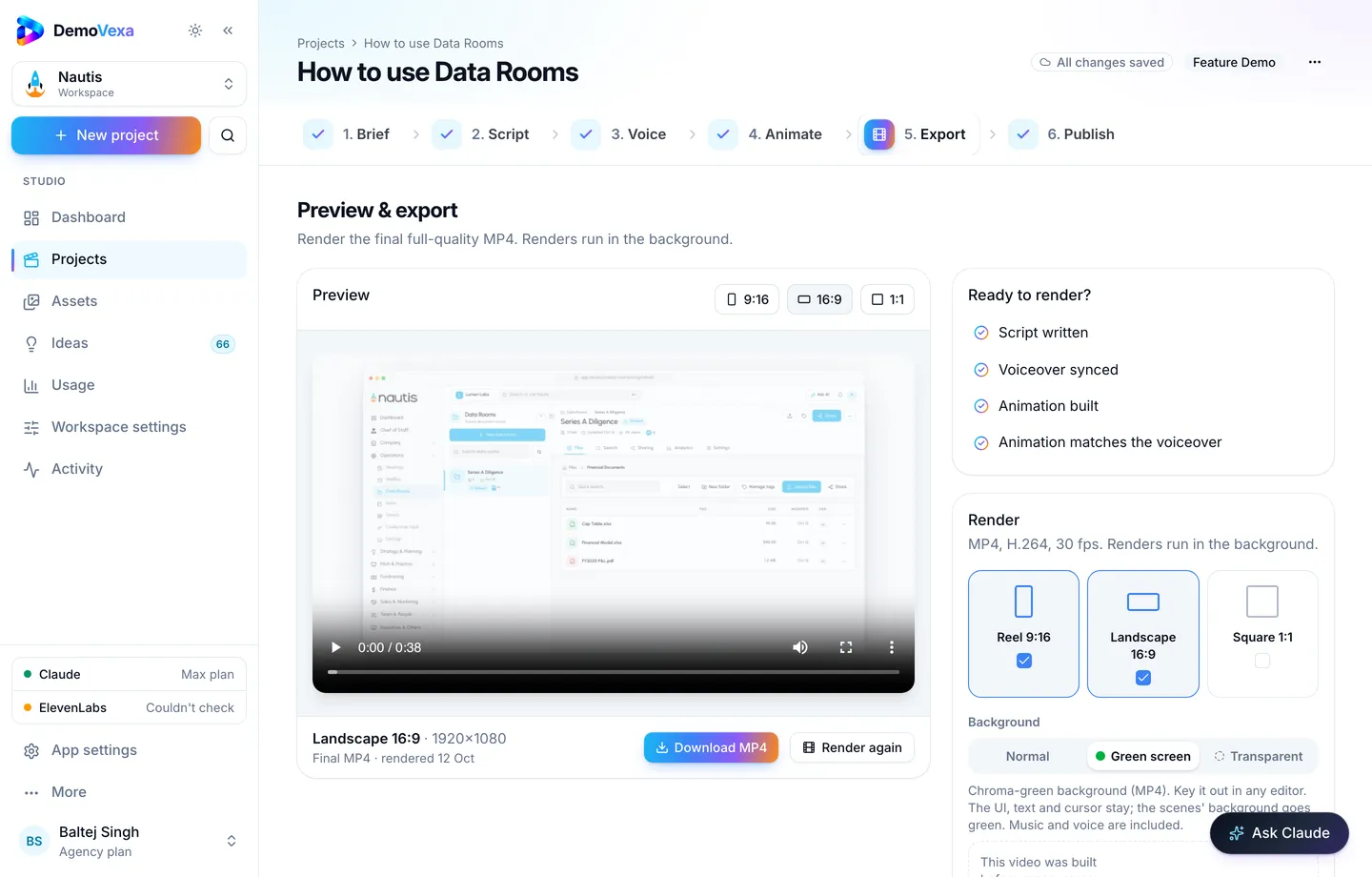
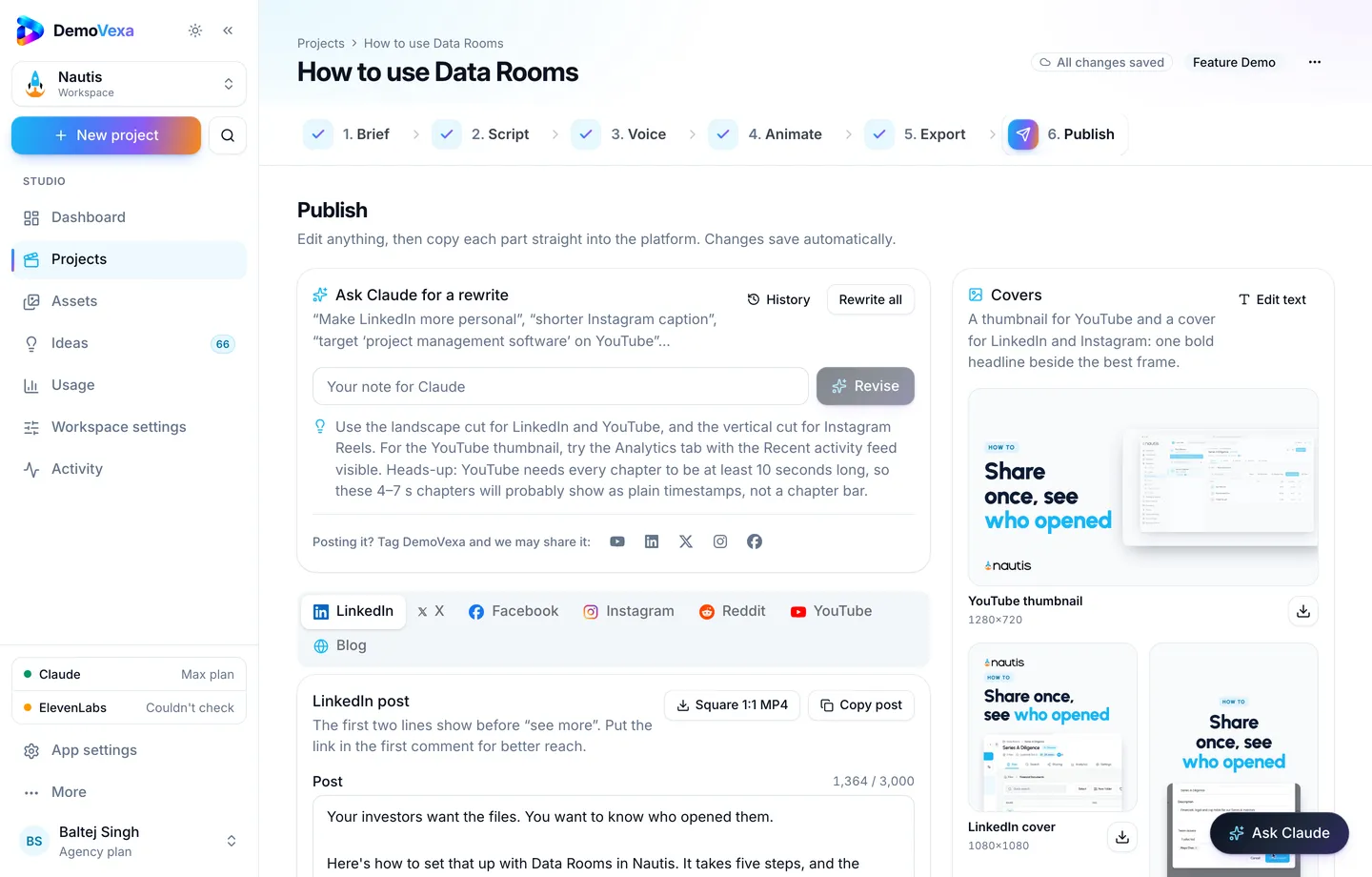
A workflow that produces citable assets in DemoVexa
- List ten questions customers ask that have a single correct click-path.
- Build each as a Feature Demo from the product code (features).
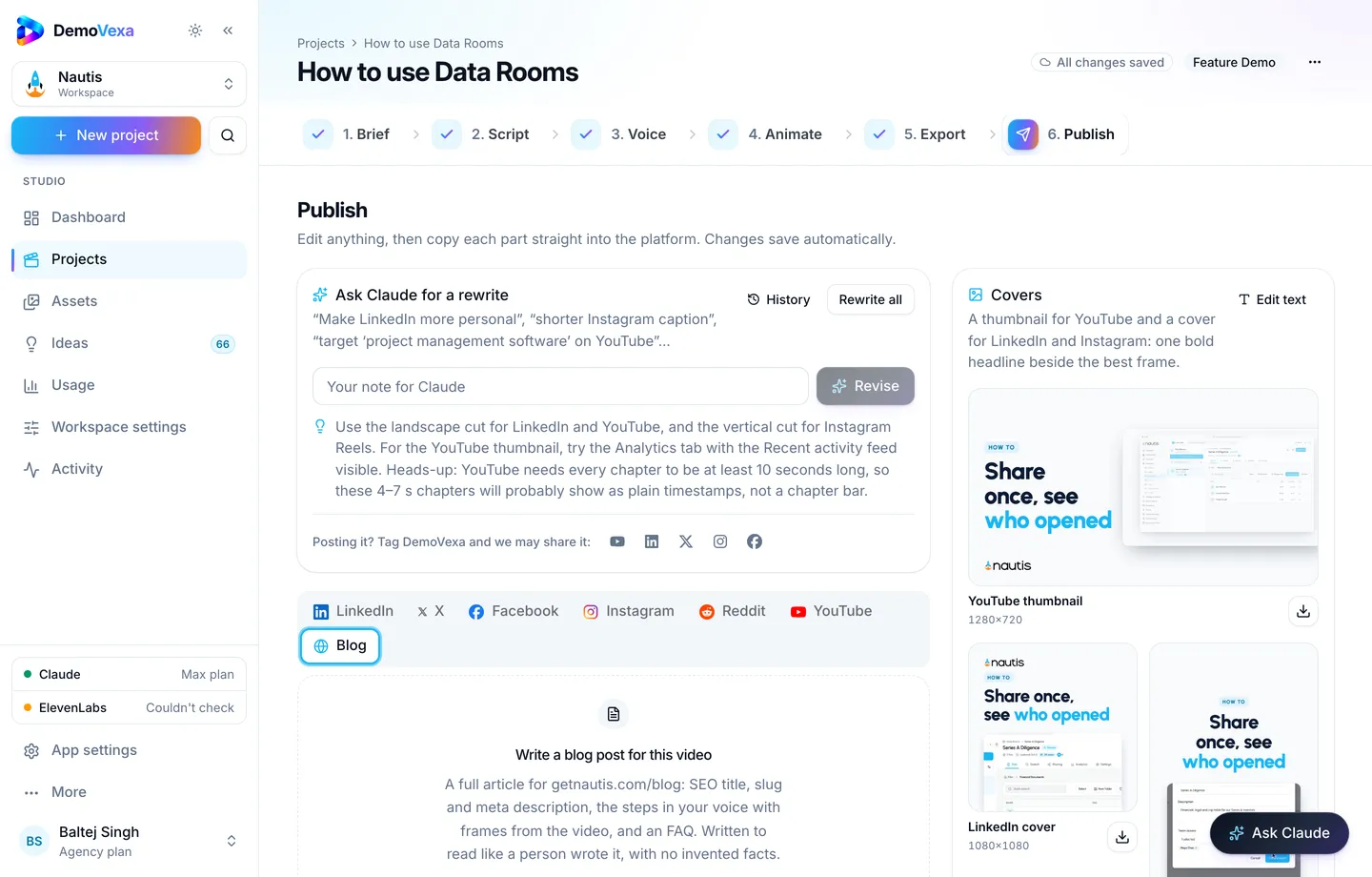
- In Publish, draft the blog companion and tighten the first paragraph into a stand-alone answer.
- Upload or embed the video on that page; keep the subtitle text consistent.
- Link related how-tos so assistants can follow a cluster, not a lone orphan URL.
- Rebuild after UI changes so citations do not describe a dead path.
What not to do
- Stuff the page with synonym lists that no human would say
- Block the article behind a signup wall
- Mark up FAQs you did not write
- Claim rankings or citation rates you have not measured
- Leave last year's screenshots in a post that still ranks
For Google's video thumbnail angle on the same pages, see video rich results. For YouTube packaging, see YouTube SEO for product videos.
Internal linking helps models map your product
Cite your own how-tos with descriptive anchors ("how to invite a teammate") instead of "click here". A cluster of accurate pages around one product entity is easier to summarize than twenty disconnected landing pages. The features and docs hubs should remain the stable parent URLs you point to.
Refresh cadence
Re-read top how-tos every release cycle. If a button renamed, update the first paragraph the same day you rebuild the video. Stale citations are worse than no citation because they teach the wrong clicks at scale.
Frequently asked questions
Can I force ChatGPT to cite my product?
No. You can only make your pages the clearest accurate source. Citations are a side effect of usefulness.
Is AEO different from SEO?
They overlap. Both reward clear answers. AEO puts more weight on quotable passages, consistent entity names and transcripts. SEO still cares about queries, links and crawlability.
Do I need a separate "AI-optimized" site section?
Usually no. Fix the how-to pages you already need for customers. That corpus is what assistants read.
Should every sentence be written for models?
No. Write for a stuck user first. Models prefer the same concreteness humans do.
How do subtitles help if the blog already has steps?
They reinforce the same terms across modalities and help when the assistant leans on video-derived text. Keep them identical in meaning to the article.
Where does DemoVexa fit?
DemoVexa turns the product's code and docs into the how-to video, script, captions and draft blog fields so you are not retyping the same steps in four tools ([why DemoVexa](https://demovexa.com/why-demovexa)).
Keep reading
All posts
Native Video on Each Social Platform: One Demo, Six Channels
Native video for LinkedIn, X, Facebook, Instagram, Reddit and YouTube Shorts, in the right format for each, with posts written for each platform.
Baltej Singh 1 min read
Replace Static Screenshots on Your Pricing and Feature Pages
Use short videos of the real product on pricing and feature pages so the page shows the workflow buyers are evaluating, not only still frames.
Baltej Singh 1 min read
Multilingual Video SEO: Rank Your Product Demo in Other Languages
Native voiceovers and translated scripts help you show up when people search how-tos in their own language, not only in English.
Baltej Singh 1 min read